
Met Store Catalog
The Metropolitan Museum of Art represents a pinnacle of human creativity, housing thousands of years of history within its walls. Extending this experience beyond the museum galleries, the Met Store Catalog provides a unique opportunity for enthusiasts to bring pieces of artistic history into their own homes. These items are not mere reproductions but are thoughtfully developed pieces that reflect the spirit and craftsmanship of the original works found in the museum collection. From intricate jewelry inspired by ancient civilizations to home accents that mirror modern masterpieces, the catalog serves as an accessible gateway to the world of fine art.
Exploring the offerings within this collection reveals a deep commitment to quality and educational value. Every item is accompanied by information regarding its historical context, making each purchase an opportunity for learning. This focus on the narrative behind the object ensures that owners can appreciate the cultural significance of their selections. Whether seeking a gift for a history buff or looking to enhance a personal collection, the variety found here caters to diverse tastes and interests, maintaining a high standard of aesthetic excellence that honors the museum institution.
Artistic Legacy Meets Modern Living
The integration of classical art into contemporary living spaces is a central theme of the Met Store Catalog. By adapting motifs from various eras, the collection allows individuals to decorate their environments with objects that carry historical weight. This approach to design ensures that the pieces remain timeless, transcending fleeting trends. For instance, a scarf featuring patterns from a 19th-century French painting or a set of coasters inspired by Greek pottery can transform a standard room into a space filled with character and conversation. The catalog emphasizes that art should be lived with and enjoyed daily, rather than being confined to a gallery setting.
Transformative Decor Inspired by Antiquity
Home decor items within the catalog often draw from the vast archaeological findings of the museum. Replicas of Egyptian statues, Greek vases, and Roman glassware are crafted with attention to the textures and colors of the originals. These pieces serve as focal points in a home, offering a sense of permanence and connection to the past. The use of high-quality materials such as cold-cast bronze, hand-painted resin, and fine porcelain ensures that these decor items possess a weight and finish that command respect. By placing a bust of a philosopher on a bookshelf or a relief plaque on a wall, a homeowner acknowledges the enduring influence of ancient thought and beauty.
Textiles also play a significant role in the home collection. Throw blankets, pillows, and table linens often feature designs sourced from the museum textile department, which includes works from the Islamic world, medieval Europe, and East Asia. These items are selected for their ability to add warmth and color while telling a story of global craftsmanship. A silk pillow inspired by an Ottoman tile pattern, for example, brings both physical comfort and a visual link to the artistry of the 16th century. This blending of function and history is what distinguishes these products from standard retail offerings.
The Art of Personal Adornment
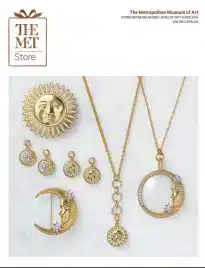
Jewelry is perhaps one of the most popular segments of the Met Store Catalog, offering wearable art that spans centuries of style. Designers work closely with the museum curators to ensure that every piece of jewelry accurately reflects the techniques and aesthetics of the period it represents. This might involve using specific gold plating techniques to mimic the look of ancient gold or sourcing semi-precious stones that were favored by Renaissance artisans. The result is a collection of earrings, necklaces, and bracelets that allow the wearer to carry a piece of history with them throughout the day.
Reimagining Classical Jewelry
The jewelry selection often highlights specific exhibitions or permanent collections. For example, pieces inspired by the jewelry of the Byzantine Empire may feature bold geometric shapes and vibrant enamel work, while items influenced by Art Nouveau might showcase fluid lines and nature-themed motifs. These accessories are appreciated not just for their beauty, but for the skill required to translate large-scale artistic concepts into delicate, wearable forms. Many of these items are handcrafted by artisans who specialize in traditional methods, ensuring that the final product remains faithful to the artistic intent of the original artifact.
- Egyptian Revival: Pieces featuring lapis lazuli, turquoise, and carnelian, often incorporating symbols like the scarab or the lotus.
- Renaissance Elegance: Intricate gold-work and pearl accents that reflect the opulence of European courts.
- Modernist Minimalism: Clean lines and bold shapes inspired by 20th-century movements like Bauhaus or Abstract Expressionism.
- Impressionist Palettes: Jewelry that uses colored glass or gemstones to evoke the light and atmosphere of Monet or Degas paintings.
Beyond aesthetics, the jewelry in the catalog often serves as a point of education. Many pieces come with a small card explaining the origin of the design and the historical period that inspired it. This turns a simple accessory into a meaningful artifact, allowing the wearer to share the story of the art with others. It is this depth of information that makes the Met Store Catalog a preferred choice for those who value both style and substance in their personal accessories.
Literary and Educational Resources
A significant portion of the catalog is dedicated to publications, including exhibition catalogs, scholarly books, and beautifully illustrated coffee table books. These resources are essential for anyone looking to deepen their understanding of art history. The museum publishing program is one of the most prolific in the world, and the catalog provides easy access to these authoritative texts. From deep examinations of a single artist’s career to broad overviews of entire civilizations, these books are valued by students, researchers, and casual art lovers alike.
Stationery and Creative Tools
For those who find inspiration in the act of creation, the catalog offers a variety of stationery and art supplies. Journals with covers featuring iconic paintings, high-quality note cards, and boxed sets of holiday cards allow for personal expression through the lens of fine art. These items encourage the tradition of handwritten correspondence, elevated by the inclusion of world-renowned imagery. Additionally, the store provides tools for aspiring artists, such as sketchbook sets and colored pencils, often packaged in cases that showcase famous works. This focus on creativity ensures that the museum mission of fostering appreciation for the arts is met in a practical, hands-on way.
The children’s section is equally impressive, featuring books and toys designed to introduce younger audiences to the world of art. Educational puzzles, coloring books based on famous paintings, and kits that allow children to create their own masterpieces help to build a foundation for lifelong artistic appreciation. By making art accessible and fun, the catalog helps to ensure that future generations will continue to value and support cultural institutions. These products are carefully selected to be both engaging and informative, avoiding the superficiality often found in mainstream children’s toys.
Commitment to Quality and Authenticity
One of the defining characteristics of the items found in the Met Store Catalog is the rigorous process of development. Every product undergoes a review to ensure it meets the high standards of the museum. This includes checking for historical accuracy, material quality, and ethical production practices. By prioritizing these elements, the catalog maintains its reputation as a source of authentic and reliable artistic goods. Consumers can trust that the items they purchase are not only beautiful but also produced with respect for the original artists and the cultures they represent.
The materials used are often a highlight of the collection. Fine silks, high-grade metals, and archival-quality paper are standard, ensuring that these items can be enjoyed for years to come. This focus on durability and craftsmanship aligns with the museum goal of preservation. Just as the museum preserves physical artifacts for the future, the store provides products that are built to last, becoming cherished possessions in their own right. The positive feedback from a global community of art lovers reflects the success of this approach, as the catalog continues to be a primary destination for those seeking unique and meaningful items.
In conclusion, the collection offered by the museum provides an unparalleled opportunity to engage with history and art in a personal way. Through a diverse range of products that emphasize quality, education, and aesthetic beauty, the catalog extends the reach of the museum into the daily lives of people around the world. Whether looking for a sophisticated piece of jewelry, a striking home accent, or an informative book, the options available are vast and inspiring. For those interested in exploring the full range of these artistic offerings, more information and the complete selection can be found in the Met Store Catalog.