
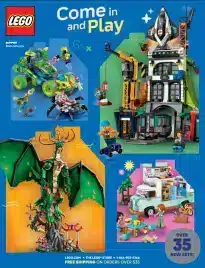
LEGO Catalog
The LEGO Catalog serves as a foundational resource for enthusiasts seeking to navigate the expansive world of plastic brick construction. For decades, these guides have acted as a bridge between imagination and reality, showcasing the latest innovations in design, engineering, and storytelling. Whether in a physical format or a digital interface, the catalog provides a structured overview of available sets, upcoming releases, and the thematic diversity that defines the modern building experience. It is a tool for planning, a source of inspiration, and a historical record of the evolution of play.
Browsers often find that these collections offer more than just product listings. They highlight the intricate details of complex builds, the vibrant colors of new elements, and the functional features of motorized components. For parents, collectors, and casual fans, the catalog represents a roadmap for creative development. By organizing products by age range, interest, and difficulty level, it ensures that every builder can find a project that aligns with their skill set and personal preferences. This accessibility remains a core reason why the catalog remains a staple in the hobbyist community.
The Strategic Importance of the LEGO Catalog for Enthusiasts
For the dedicated collector, the LEGO Catalog is an essential instrument for tracking set longevity and availability. Many builders use these guides to identify which sets are nearing retirement, allowing them to prioritize purchases before items disappear from retail shelves. The layout typically emphasizes seasonal highlights, such as winter village scenes or summer-themed sets, helping fans align their building activities with the time of year. This strategic approach to collecting turns a simple hobby into a well-managed pursuit of architectural and mechanical excellence.
Beyond simple product identification, the catalog offers a glimpse into the collaborative efforts between designers and fans. Many themes featured in the pages are the result of community feedback or popular culture trends. From the intricate details of modular buildings to the high-speed aerodynamics of licensed supercar models, the catalog captures the current zeitgeist of the building world. It reflects a commitment to quality and a passion for detail that resonates with people of all ages across the globe.
Navigating Modern Themes and Series
The current landscape of building sets is vast, and the catalog provides the necessary structure to explore it. One of the most prominent sections often focuses on the Icons series, which caters to adult builders looking for sophisticated display pieces. These sets frequently include historical landmarks, retro vehicles, and botanical collections that require advanced techniques and patience. By highlighting these complex builds, the catalog recognizes the growing demographic of adult fans who view building as a form of relaxation and artistic expression.
In contrast, the catalog also emphasizes play-centric themes like City and Friends. These sections are filled with vibrant imagery of fire stations, hospitals, and bustling urban environments. They illustrate how individual sets can be combined to create expansive dioramas, encouraging builders to expand their horizons and develop their own narratives. The visual storytelling within the catalog pages helps children and parents visualize the play possibilities, making it easier to choose sets that will provide hours of engagement and skill-building.
Technological Integration and Digital Accessibility
While the traditional paper catalog holds a nostalgic charm, the transition to digital formats has introduced a new level of interactivity. Digital catalogs often feature 3D rotations, video demonstrations of moving parts, and direct links to building instructions. This evolution allows builders to see a set from every angle before making a decision. It also facilitates easier updates, ensuring that the information remains current even as new products are launched mid-season. The convenience of having a comprehensive guide on a smartphone or tablet has made the building experience more fluid and connected.
Furthermore, digital versions often include search functions that allow users to filter by piece count, price range, or specific interests. This functionality is particularly useful for those looking for a specific challenge or a gift within a certain budget. The integration of QR codes in physical catalogs further bridges the gap, allowing users to scan a page and immediately access additional content or purchase options. This synergy between physical and digital media ensures that the catalog remains relevant in an increasingly tech-driven world.
Educational Value and Skill Development
The LEGO Catalog is not merely a marketing tool; it is an educational resource that promotes literacy and spatial awareness. As children browse the pages, they learn to categorize items, compare specifications, and understand the relationship between different components. The inclusion of the Technic line, for example, introduces young builders to basic principles of engineering and mechanics. By seeing how gears, axles, and pneumatic systems work in the catalog photos, they gain a preliminary understanding of physics and movement.
- Spatial Reasoning: Observing how 2D images translate into 3D structures helps develop visualization skills.
- Planning and Budgeting: Using the catalog to save for a desired set teaches financial responsibility and goal setting.
- Thematic Exploration: Learning about different cultures, historical eras, and scientific concepts through specialized themes.
- Fine Motor Skills: The anticipation of building encourages the development of dexterity required for assembly.
The Role of the Catalog in Gift Giving and Community
During holiday seasons and birthdays, the LEGO Catalog becomes a primary reference for gift-givers. It simplifies the process of finding a meaningful present by providing clear age recommendations and interest categories. A grandparent looking for a gift for a space-loving grandchild can easily find the latest NASA-inspired sets or futuristic exploration vehicles. This clarity reduces the stress of shopping and ensures that the recipient receives a gift that matches their developmental stage and hobbies.
Additionally, the catalog fosters a sense of community. Fans often discuss the contents of a new catalog release on forums and social media, sharing their excitement for upcoming pieces or debating the merits of different designs. It acts as a shared reference point that brings people together, regardless of their location. The shared experience of circling favorite items in a catalog is a tradition that spans generations, creating a lasting bond between those who enjoy the art of construction.
Sustainability and Future Directions
As environmental awareness grows, the production of the LEGO Catalog has also seen shifts toward sustainability. Many versions are now printed on FSC-certified paper, and there is a concerted effort to reduce the carbon footprint of distribution. The push toward digital catalogs also aligns with these environmental goals, offering a waste-free alternative for those who prefer to browse online. This commitment to the planet reflects the broader values of the building community, which seeks to ensure that future generations can enjoy the same creative opportunities.
The future of the catalog likely involves even more immersive experiences, such as augmented reality features that allow builders to see a life-sized version of a set in their own living room. By continuing to innovate, the catalog will remain an indispensable part of the building journey. It will continue to inspire millions to pick up a brick and start creating, proving that a well-organized guide is the first step toward a masterpiece. To find the latest sets and explore the full range of possibilities, builders can always consult the current LEGO Catalog.