
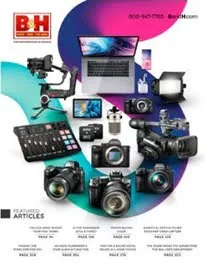
B&H Photo Catalog
Finding the right tools for professional media production requires a source that understands the intricate needs of photographers, videographers, and audio engineers. The B&H Photo Catalog serves as a definitive guide for those seeking high-quality equipment, ranging from entry-level mirrorless cameras to high-end cinema rigs. This resource simplifies the process of comparing technical specifications and finding compatible accessories for complex setups.
As technology in the imaging industry moves forward at a rapid pace, staying informed about the latest releases is essential for maintaining a competitive edge. The catalog provides detailed information on sensor sizes, lens mounts, and data processing capabilities, ensuring that every purchase aligns with specific project requirements. Whether setting up a new studio or upgrading a field kit, the variety of options available caters to every niche in the creative industry.
The Evolution of Professional Imaging Technology
The landscape of professional photography has shifted significantly toward mirrorless systems that offer incredible autofocus speed and high-resolution sensors. Within the B&H Photo Catalog, professionals can find a vast array of full-frame and medium-format cameras that push the boundaries of what is possible in still imaging. These devices are not just tools but precision instruments designed to capture light with maximum fidelity. Modern sensors now regularly exceed forty-five megapixels, allowing for large-scale printing and significant cropping without loss of detail. This level of performance is critical for commercial and editorial photographers who require the highest standards of image quality.
Advanced Optics and Lens Selection
A camera body is only as effective as the glass placed in front of it. The catalog features an extensive selection of prime and zoom lenses designed for various focal lengths and apertures. For portrait photographers, an 85mm prime lens with a wide aperture like f/1.2 or f/1.4 is often the preferred choice for creating a shallow depth of field and beautiful background blur. Conversely, landscape photographers might look toward ultra-wide-angle lenses that capture expansive vistas with edge-to-edge sharpness. The inclusion of specialized optics, such as tilt-shift lenses for architectural work or macro lenses for extreme close-ups, ensures that every specialized field is well-represented.
Cinematic Tools for Modern Filmmakers
Video production has seen a similar surge in technological capability, with 4K resolution becoming the standard and 8K workflows gaining traction. The B&H Photo Catalog includes professional cinema cameras that offer high dynamic range and internal raw recording. These features are vital for color grading in post-production, allowing filmmakers to retain detail in both the brightest highlights and the deepest shadows. Beyond the camera itself, the catalog highlights the importance of stabilization systems. Gimbals and shoulder rigs have become indispensable for achieving smooth, cinematic movement in run-and-gun shooting environments.
Lighting plays a pivotal role in the quality of any video production. The transition from traditional tungsten lights to energy-efficient LED panels has revolutionized on-set workflows. Many of the LED solutions found in the catalog offer bicolor or full RGB capabilities, allowing creators to adjust color temperature and hue on the fly without the need for physical gels. This flexibility speeds up production and allows for more creative experimentation with lighting setups. High-output COB (Chip on Board) lights can be paired with various modifiers like softboxes, snoots, and fresnel attachments to control the shape and quality of light precisely.
Professional Audio and Post-Production Hardware
Visuals are only half of the story; high-quality audio is equally important for professional results. The catalog offers a deep selection of microphones, including shotgun mics for location sound, large-diaphragm condensers for studio vocals, and lavalier systems for interviews. For those working in the field, portable multi-track recorders with high-quality preamps and XLR inputs are essential for capturing clean, distortion-free sound. These devices often include features like 32-bit float recording, which virtually eliminates the risk of audio clipping by providing immense headroom during the recording process.
Once the footage and audio are captured, the focus shifts to the editing suite. The B&H Photo Catalog provides the high-performance computing power necessary for handling demanding codecs and complex visual effects. This includes workstations with multi-core processors, professional-grade graphics cards, and high-speed NVMe storage solutions. Color-accurate monitors are another critical component for editors and colorists, ensuring that the final output looks consistent across different viewing platforms. Calibration tools and external control surfaces further enhance the efficiency and accuracy of the post-production workflow.
- Mirrorless and DSLR Cameras: High-resolution sensors for every style of photography.
- Professional Lenses: A wide variety of focal lengths and apertures for precise control.
- Lighting Equipment: Versatile LED and strobe options for studio and location work.
- Audio Gear: Microphones and recorders for crystal-clear sound capture.
- Computing Solutions: Powerful hardware for seamless video and photo editing.
Infrastructure for Creative Environments
Building a functional studio requires more than just cameras and lights; it involves a robust infrastructure. Grip equipment, such as C-stands, booms, and clamps, provides the necessary support for heavy gear. Background systems, including seamless paper and chroma key greenscreens, allow for versatile set designs. Additionally, data management is a major consideration for modern creators. The catalog offers various RAID storage systems and cloud-based backup solutions to protect valuable digital assets. Reliable power management, including uninterruptible power supplies (UPS) and high-capacity V-mount batteries, ensures that production continues even in challenging environments.
Exploring the wide range of tools available for creative professionals reveals the dedication to quality and performance inherent in the industry. Every piece of equipment, from the smallest filter to the most advanced cinema camera, contributes to the final vision of the artist. By utilizing the comprehensive resources found in the B&H Photo Catalog, professionals can make informed decisions that elevate their work and streamline their creative processes.